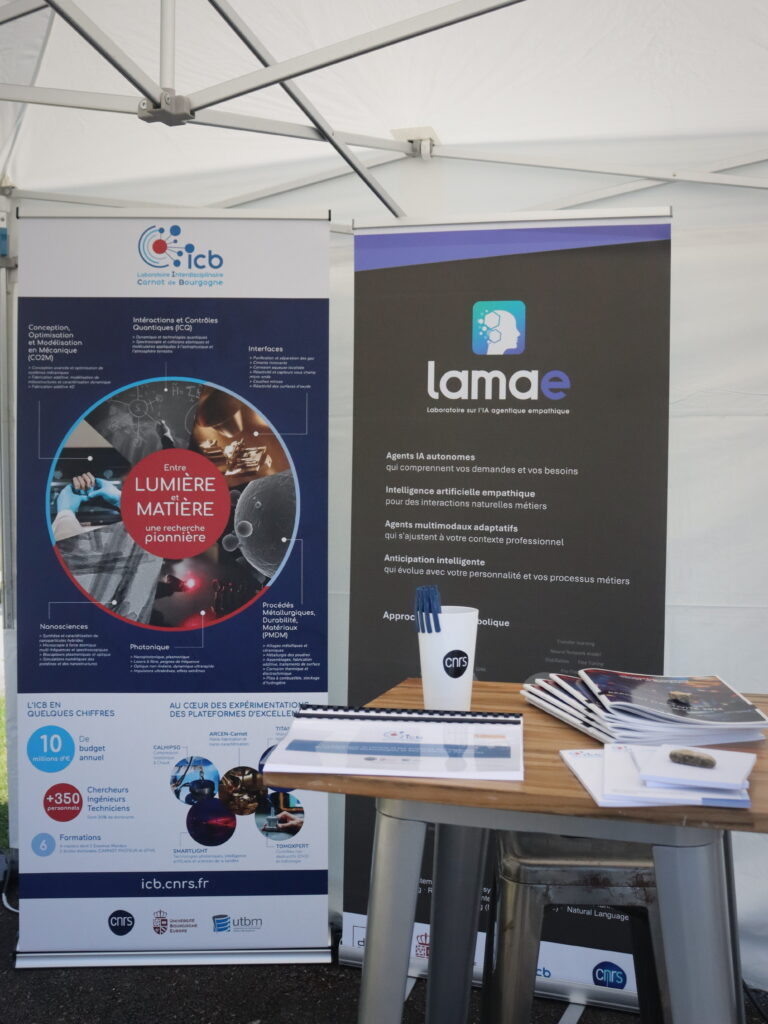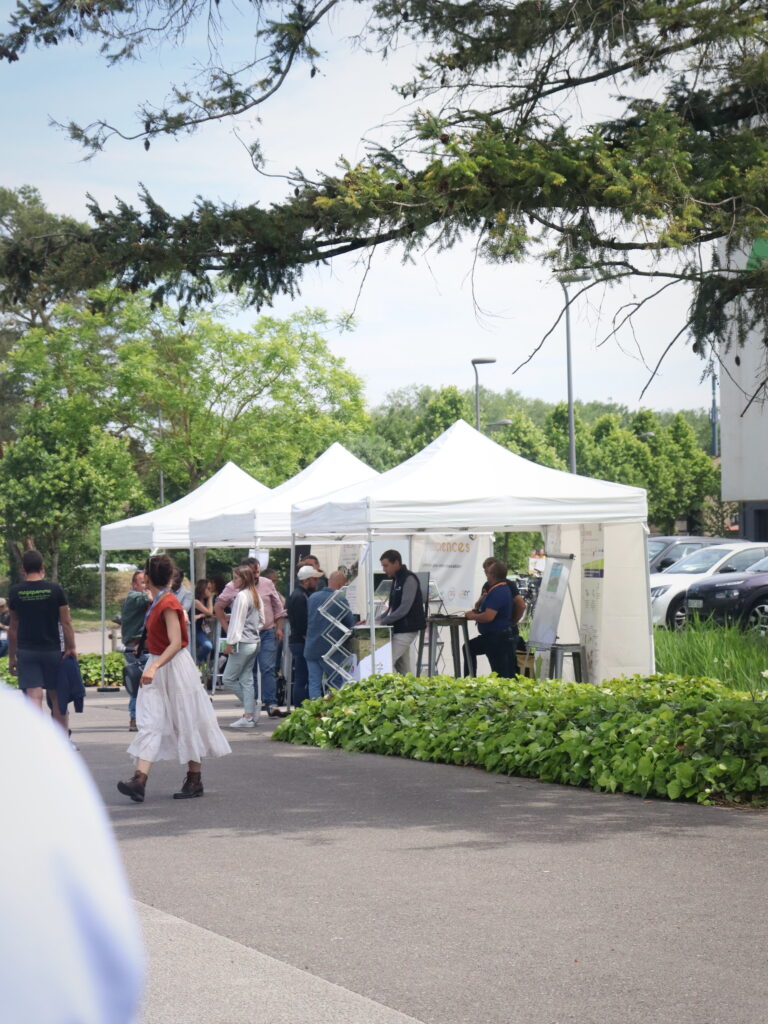

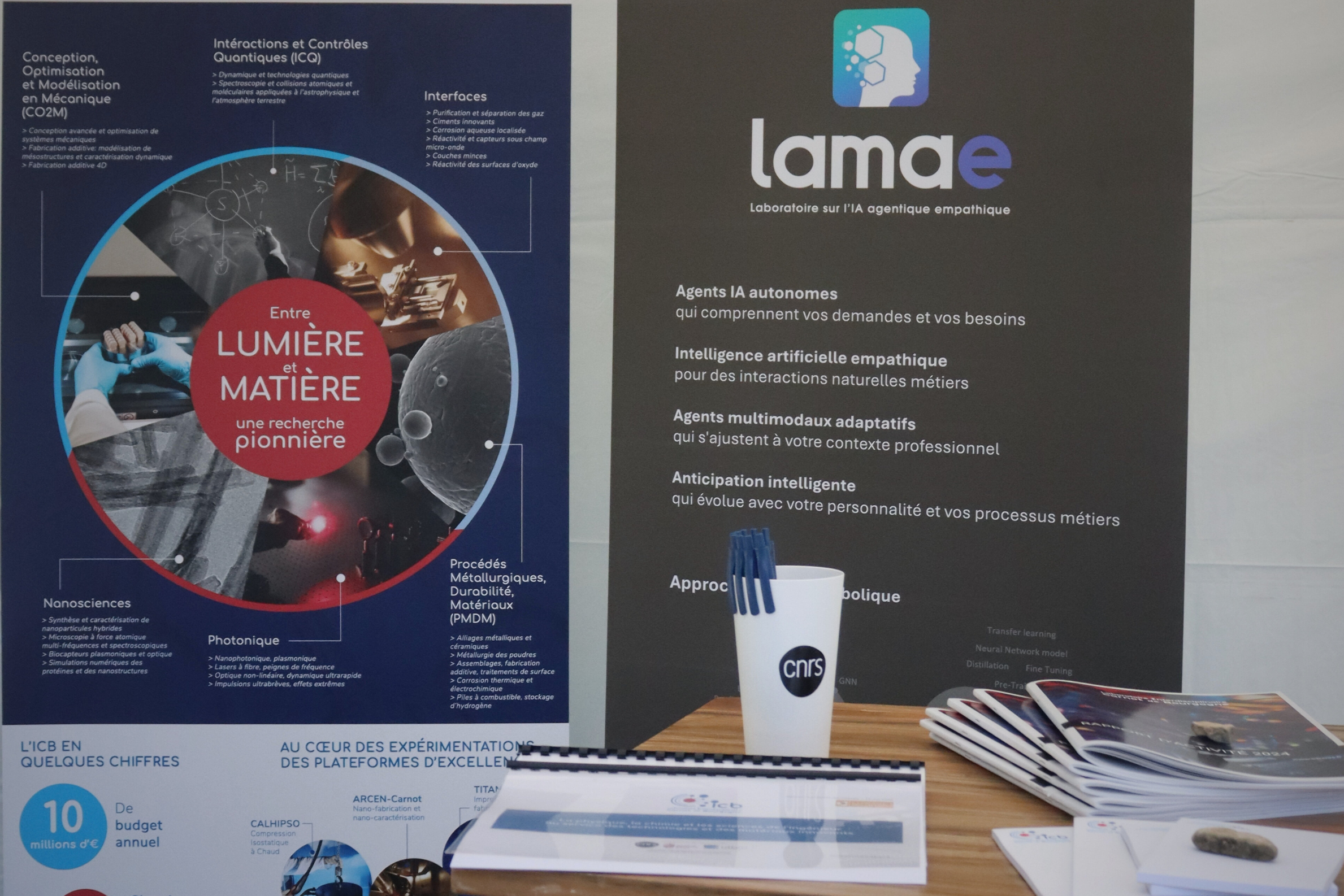
On Wednesday, May 15, 2025, the ICB laboratory participated as an exhibitor at La Croisée des Champs, organized by AgrOnov in Bretenière.
Following its first edition, which focused on agricultural revolutions, this event fostered dialogue between the worlds of research, innovation, and practical experience around the theme “AI in the Service of Agricultural Transitions.” The day brought together nearly 200 participants: innovative companies, artificial intelligence experts, agricultural policymakers and advisors, as well as agricultural students.
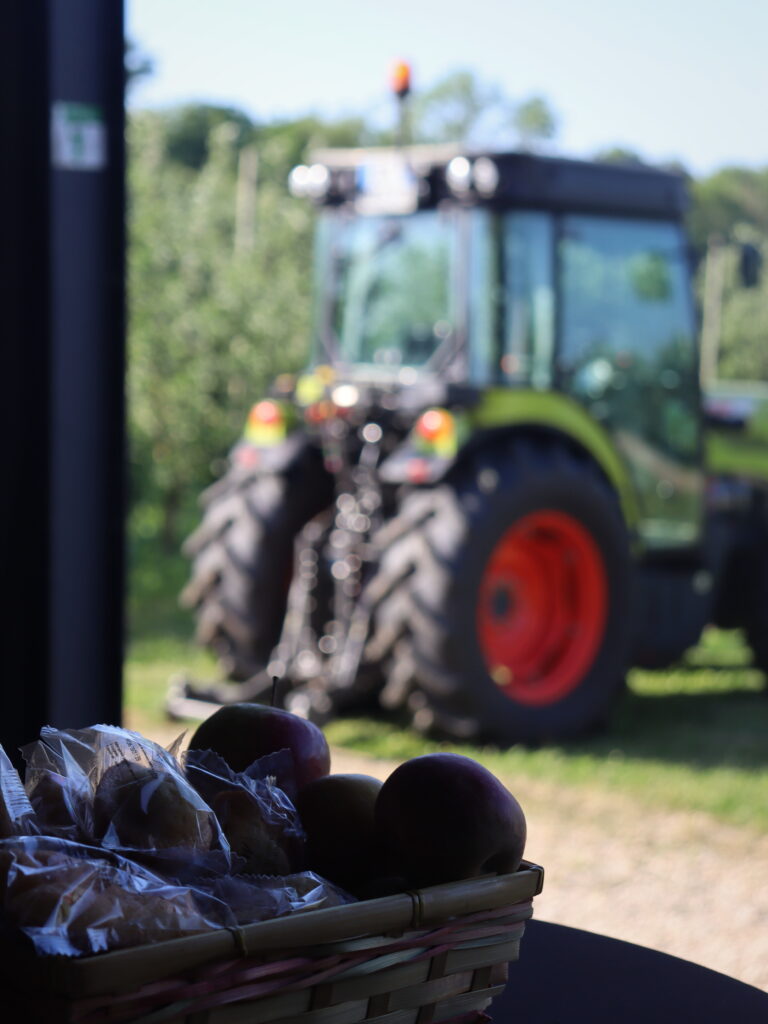
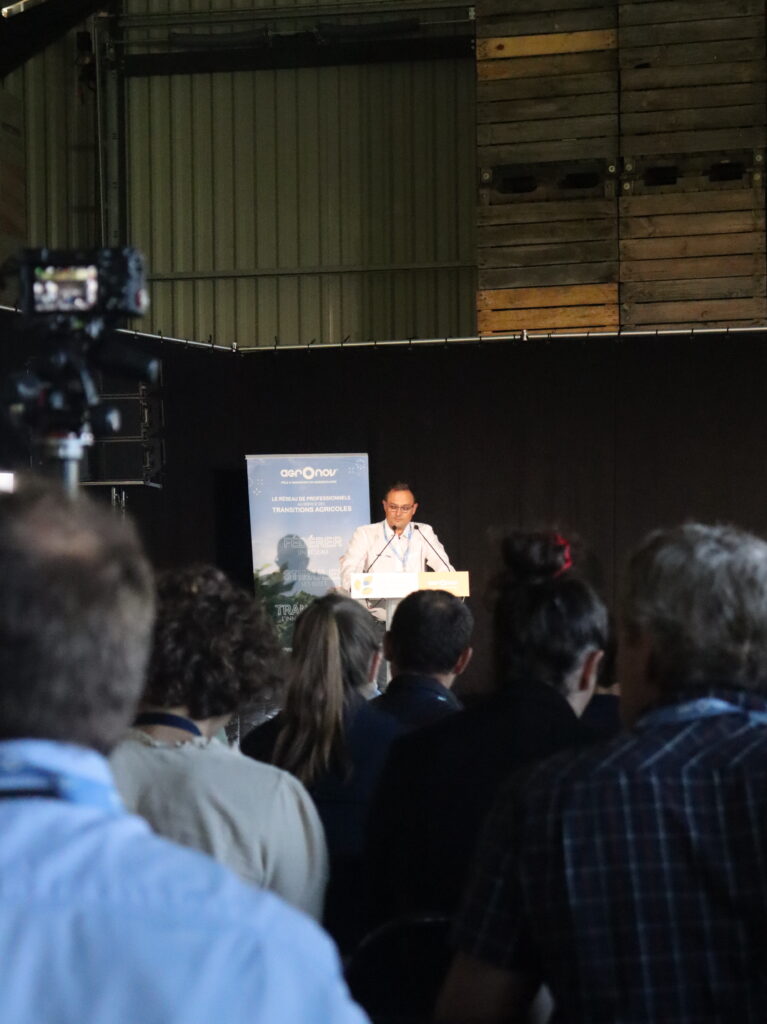
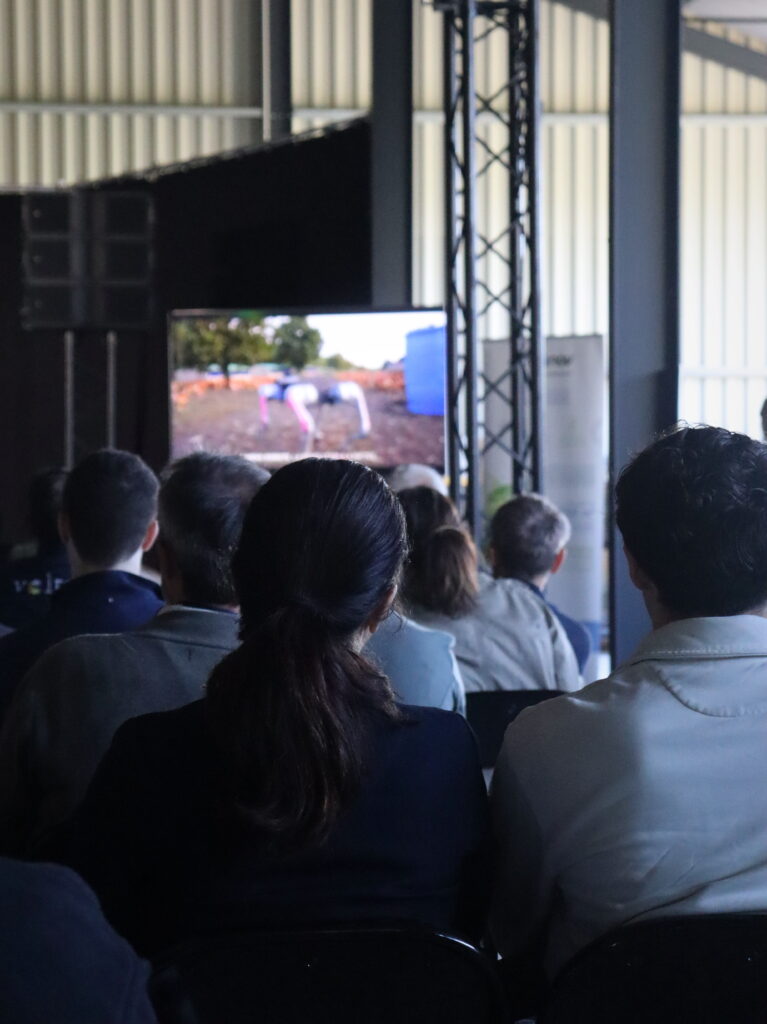
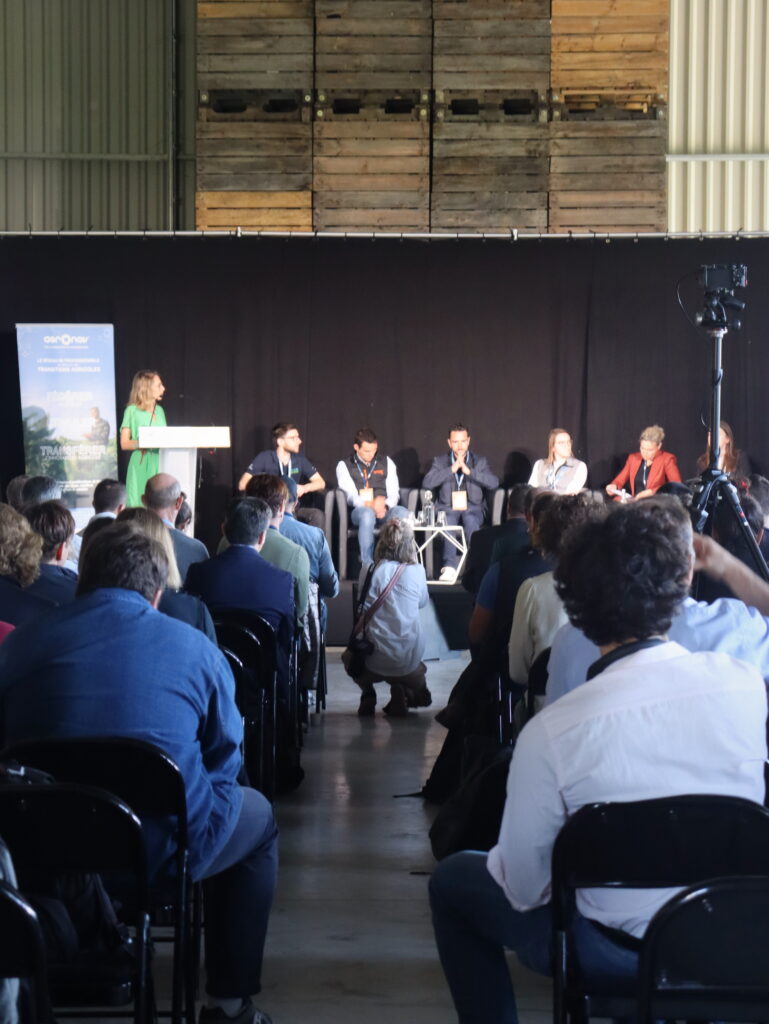
A day filled with discussions and demonstrations
The morning began with an introductory presentation by Frédérik Miguette (Director of Application Services at OCI Informatique et Digital), who outlined the opportunities offered by AI, while also highlighting its risks and challenges. A roundtable discussion then brought together six experts in the fields of AI and agriculture to discuss the practical applications of artificial intelligence in the agricultural sector.
Participants then explored the Innovation Village before attending a workshop on agricultural robotics led by the Robagri association. A convivial lunch featuring a buffet of 100% Côte-d’Or products provided an opportunity to continue the discussions.
The afternoon was dedicated to demonstrations, presentations of innovative solutions, and business meetings, fostering synergies between the various audiences.
ICB Presents Two Innovative Projects for the Agriculture of Tomorrow
On this occasion, the ICB laboratory highlighted two research projects that contribute to agricultural transitions and utilize AI.
The first, conducted within the framework of the European H2020 ICT GRACED project, aims to develop a microfluidic module integrated into a detection system based on a plasmo-photonic biosensor chip. This device combines infrared-emitting quantum dots with polymer waveguides to rapidly detect food contaminants.
The second project concerns a 6G smart sensor dedicated to detecting ammonia in humid environments—a crucial issue for monitoring emissions in livestock farming and improving animal welfare. Thanks to a machine learning model, the sensor compensates for the effects of humidity to ensure reliable measurements. The data collected can feed into alert systems, optimize farm management, and reduce inputs.