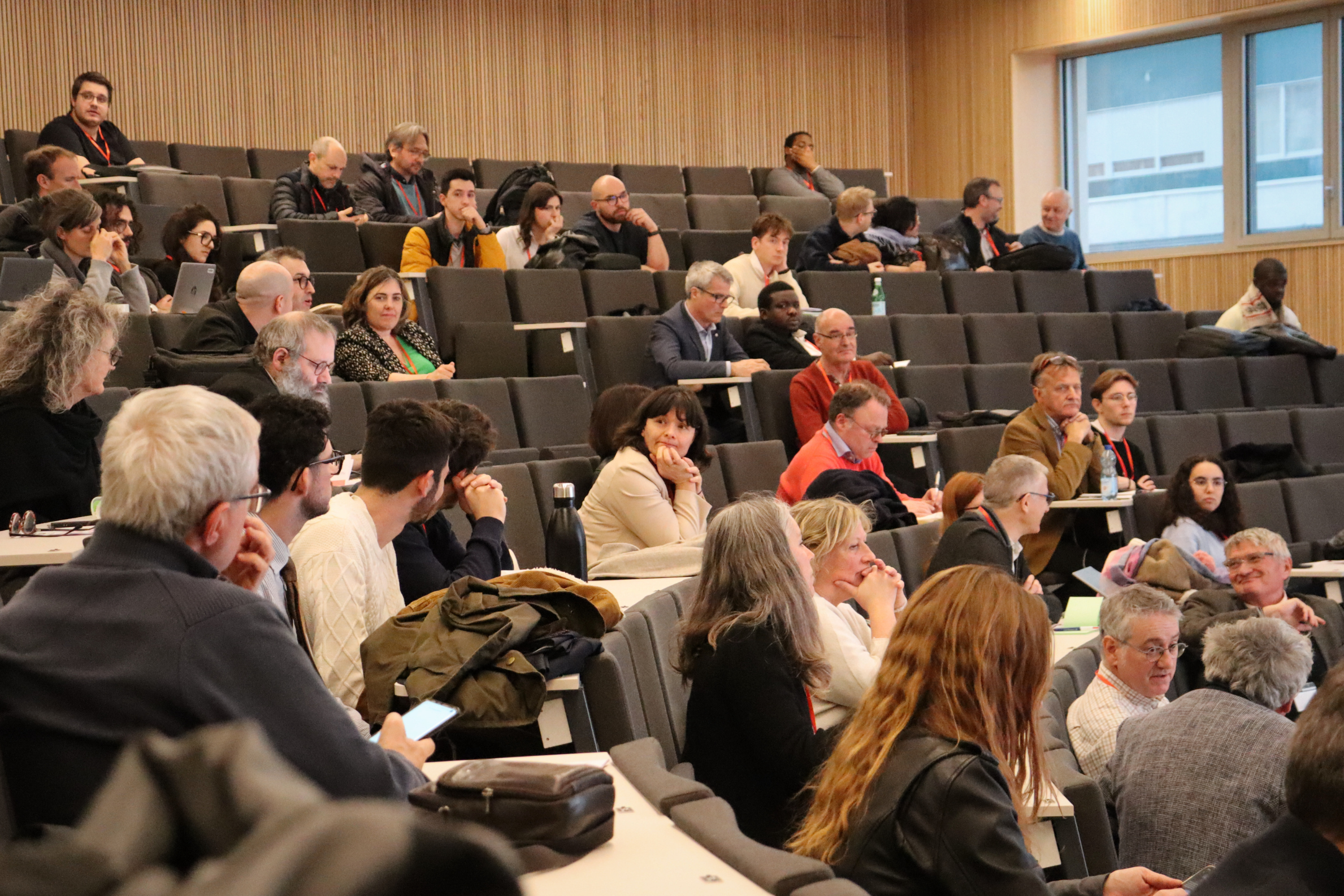

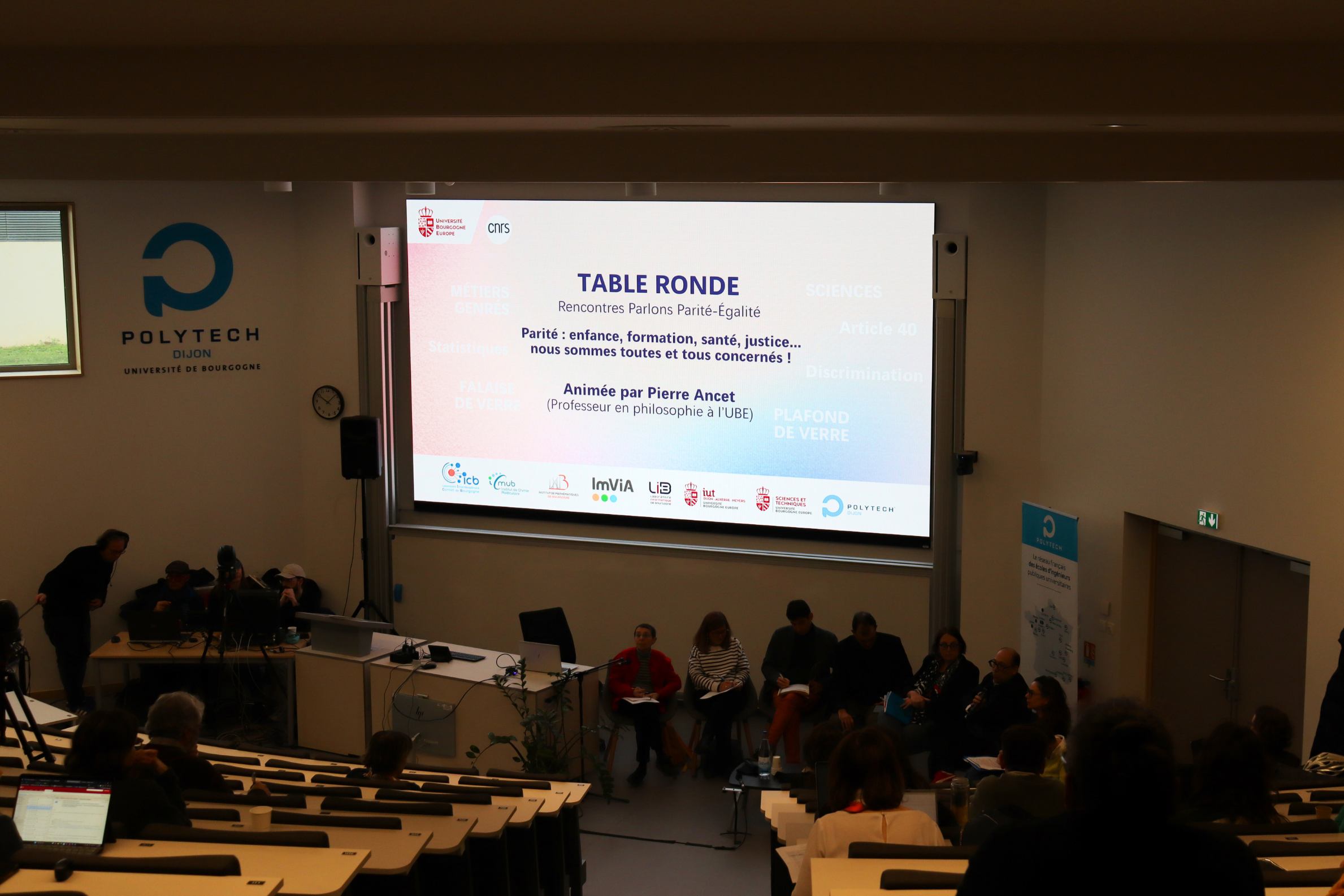
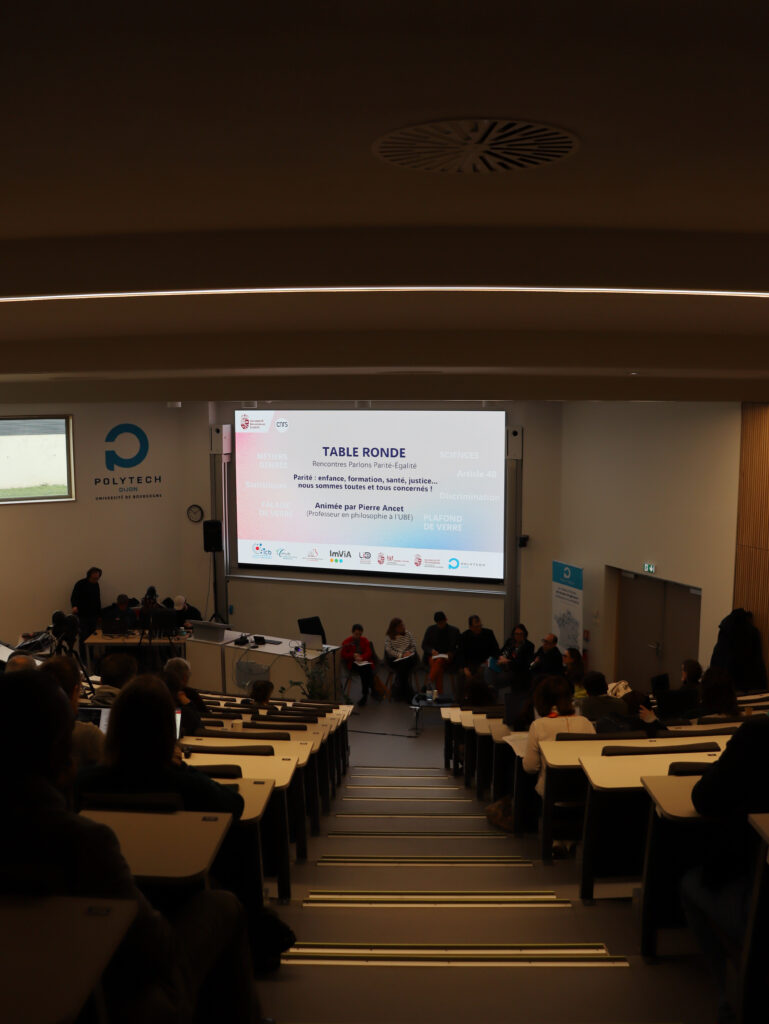
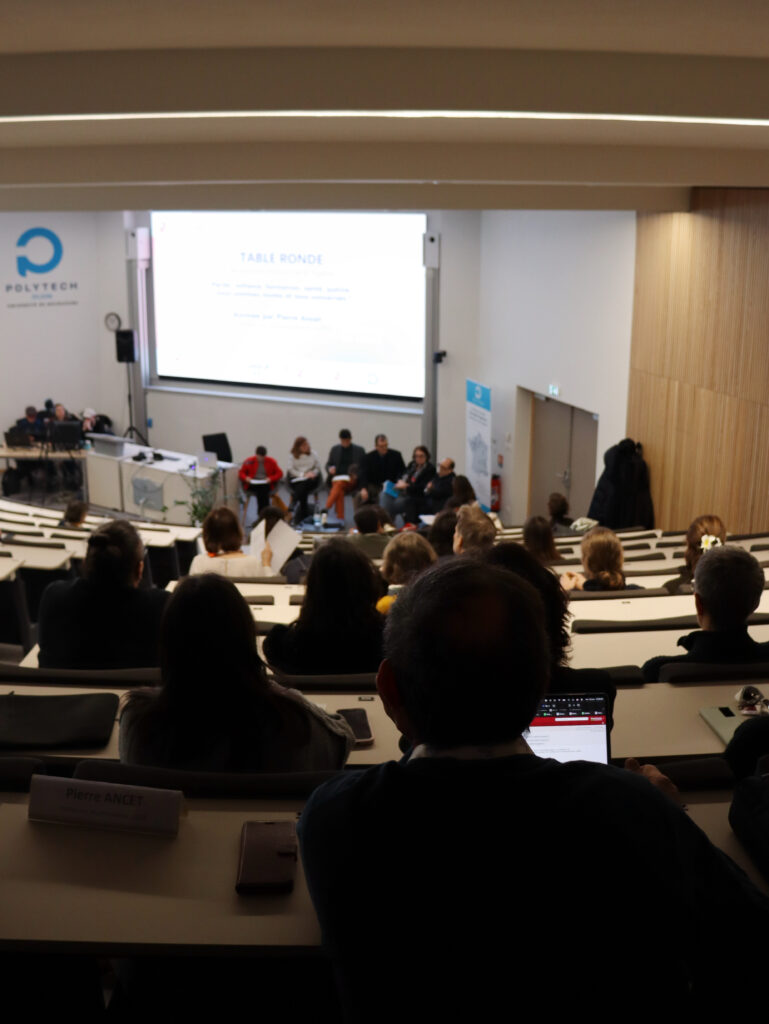
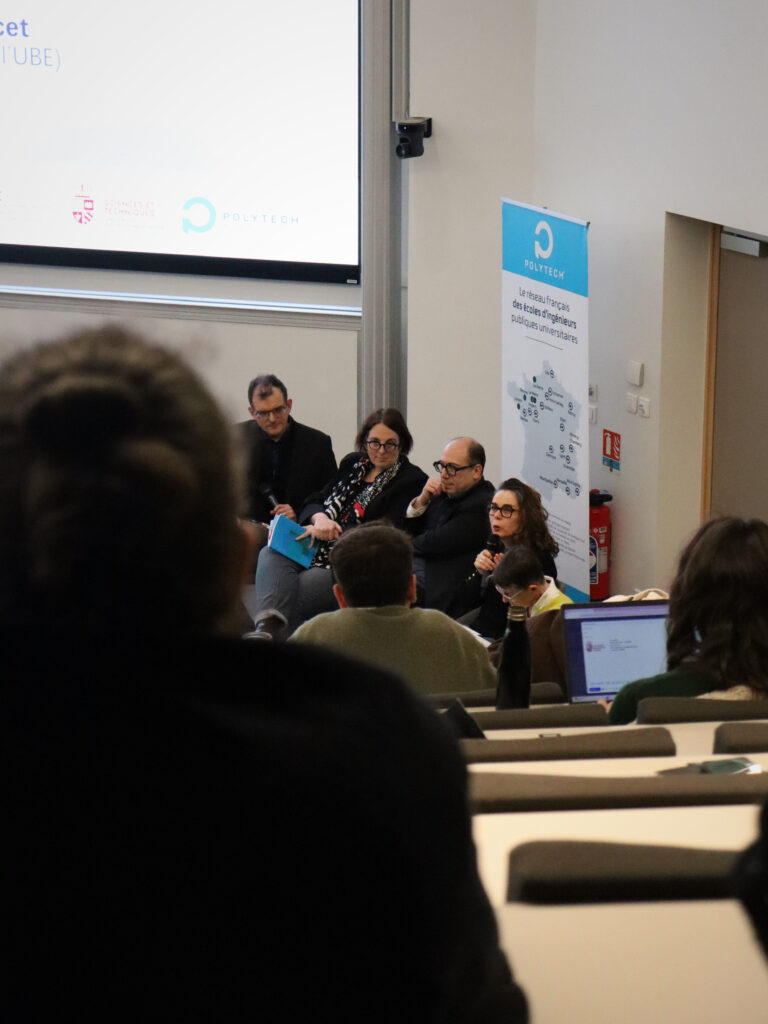
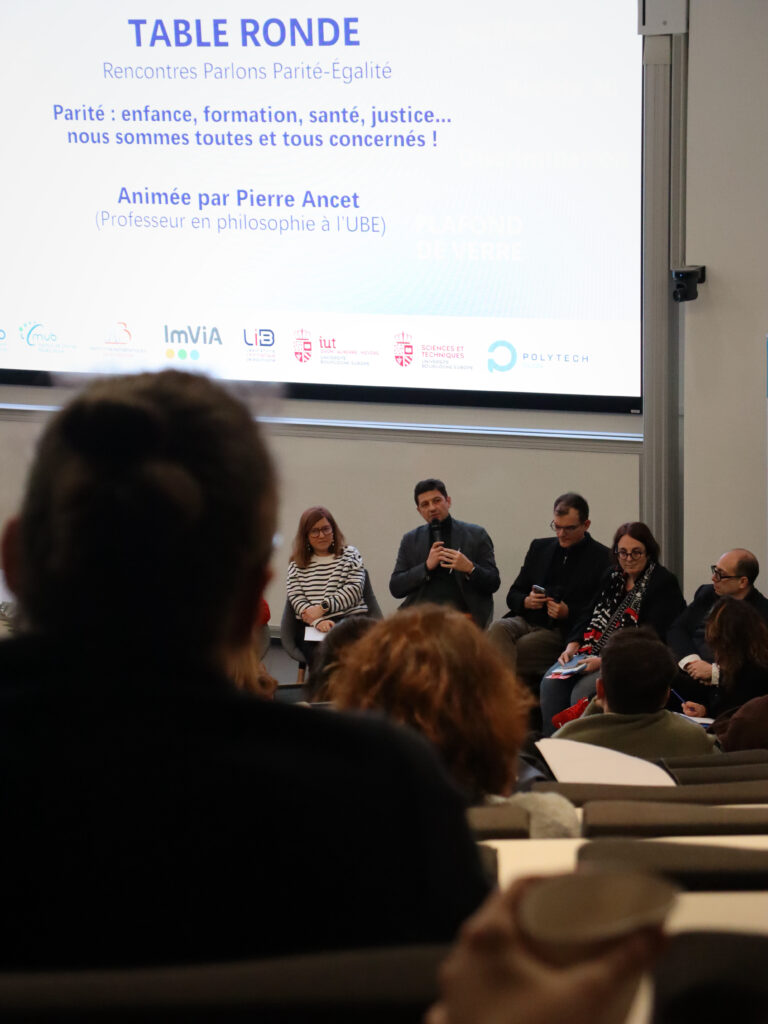
On January 23, 2026, nearly 50 people in person and 17 via videoconference gathered in the Grand Amphitheater of Polytech Dijon (University of Burgundy Europe) to participate in the “Let’s Talk About Gender Equality” roundtable, organized by the ICB (thanks to Alice Martin, gender equality coordinator). It was a morning of rich discussions centered on a widely shared observation: gender inequalities permeate all aspects of society, from childhood to justice, including education, health, and the workplace.
Leb by Pierre Ancet, professor of philosophy at the University of Burgundy Europe, the discussion brought together viewpoints from the academic, institutional and professional worlds, highlighting the diversity, but also the convergence of observations.
Professions, perceptions, and career paths: deeply entrenched inequalities
The roundtable opened with a presentation by Mathieu Azcue, a lecturer in midwifery, who revisited the history of midwifery, a profession long reserved for women. He noted that its opening to men is recent and that healthcare professions remain strongly influenced by gender stereotypes.
The discussion then turned to issues of prevention and combating discrimination and gender-based and sexual violence. Sarah Boratav, head of the equality and diversity project at Paris-Saclay University, shared her field experience with prevention, training, and support programs, emphasizing the importance of trust and transparent procedures.
Public policies, justice, and institutional responsibilities
The discussion continued with Emmanuelle Delhomme, Regional Director for Women’s Rights and Equality, who emphasized the central role of local public policies and collaborative work in ensuring lasting gender equality.
A legal perspective was then provided by Olivier Caracotch, Public Prosecutor of Dijon. His presentation shed light on the challenges related to the justice system’s handling of violence and discrimination, as well as the fundamental role of institutions in recognizing wrongdoing and protecting individuals.
The persistent obstacles to women’s access to scientific careers were addressed by Colette Guillopé, Professor Emeritus of Mathematics. She highlighted the influence of social norms, academic trajectories, and the lack of female role models, which continue to shape career paths.
The world of work and shared observations
At the end of the roundtable discussion, Karla Martinez, coordinator and head of partnerships at FETE – Women Equality Employment, addressed the specific challenges of the world of work: access to employment, career advancement, and the fight against workplace discrimination.
The concluding remarks were delivered by Marie Duru-Bellat, professor emerita of sociology, whose presentation echoed the morning’s discussions. Her work helped to place all the discussions in a broader perspective, reminding us that inequalities are constructed very early in life, particularly through socialization and educational pathways, and that they are embedded in widely shared systemic mechanisms.
An open dialogue, beyond observations
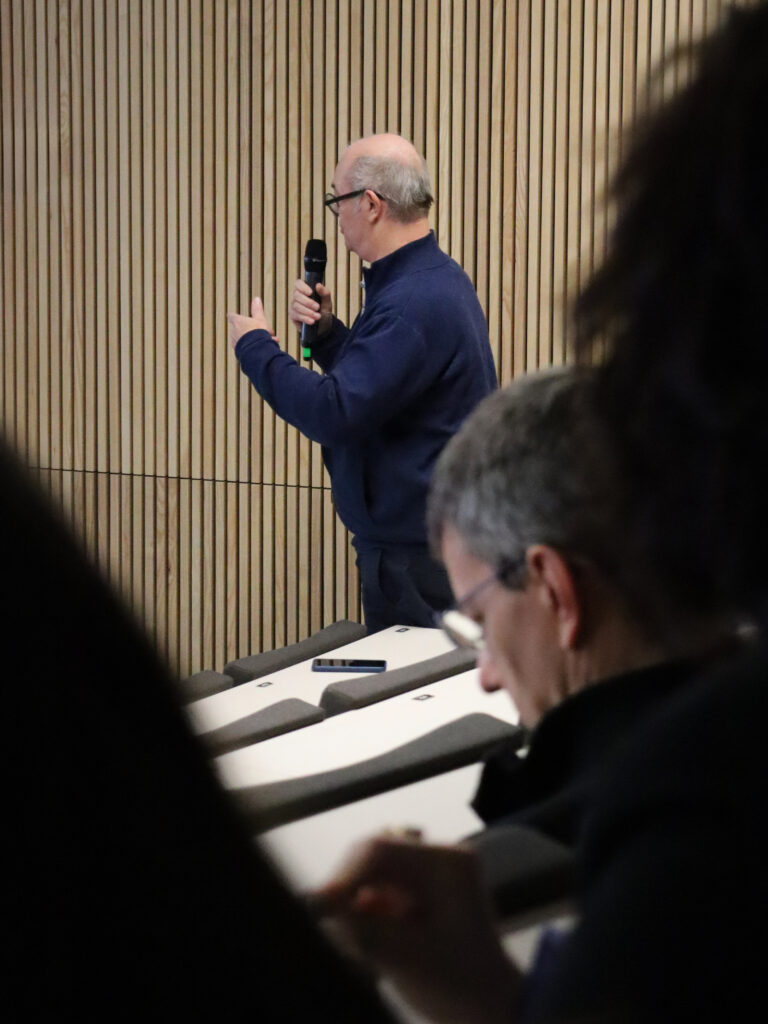
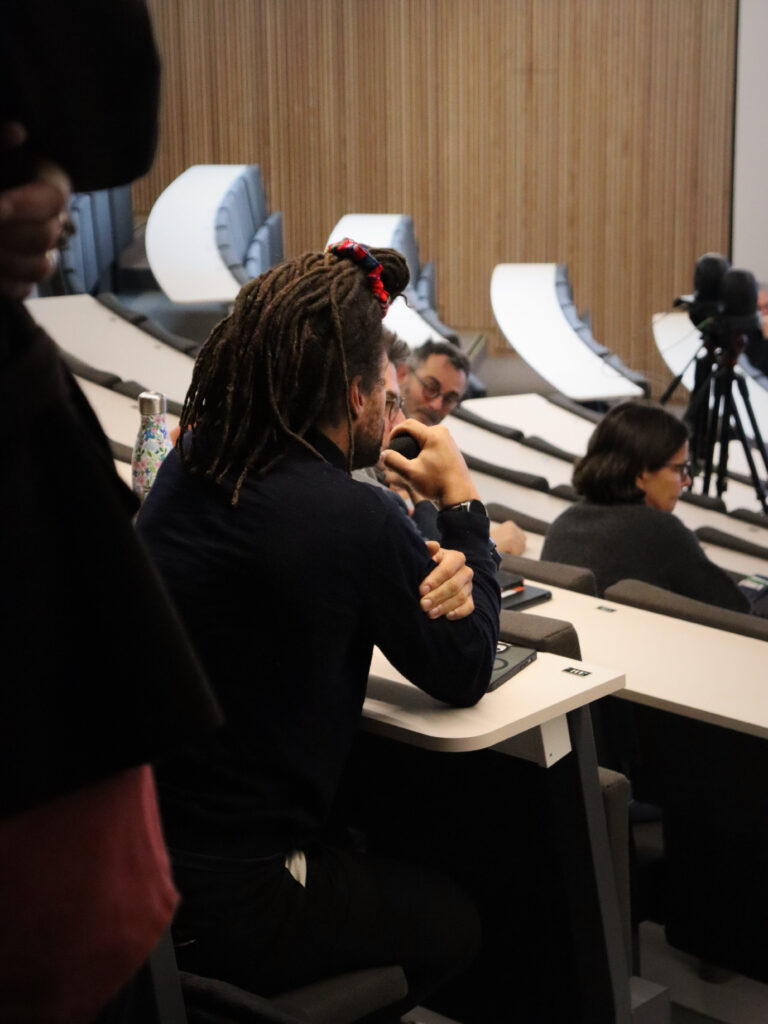
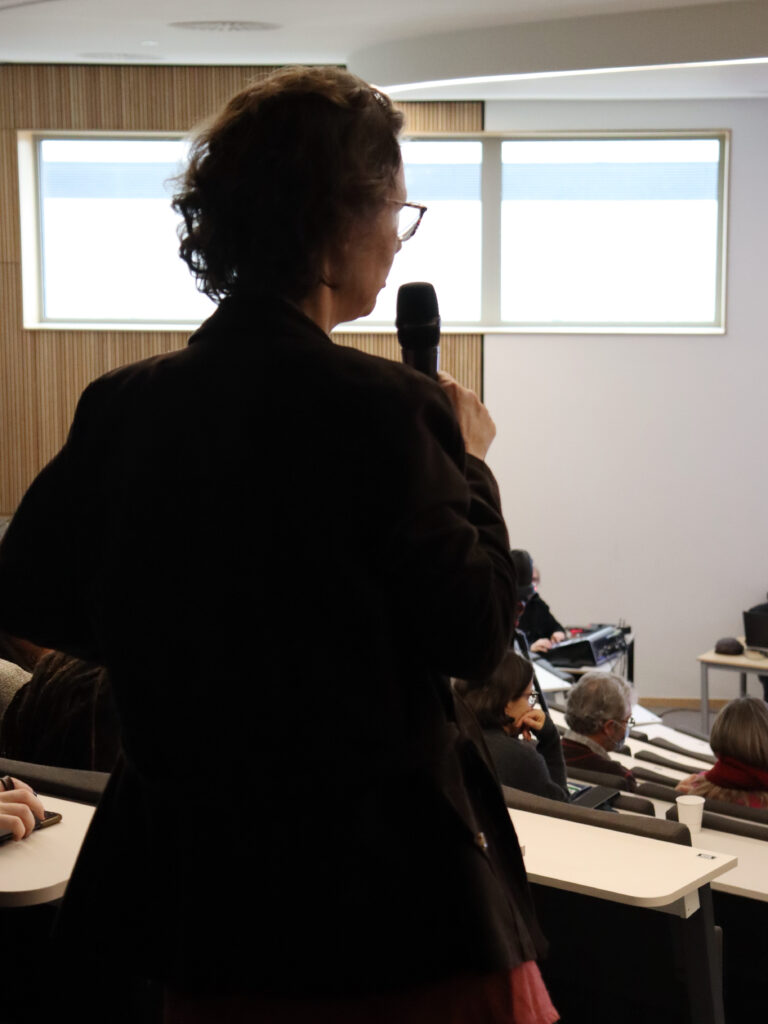
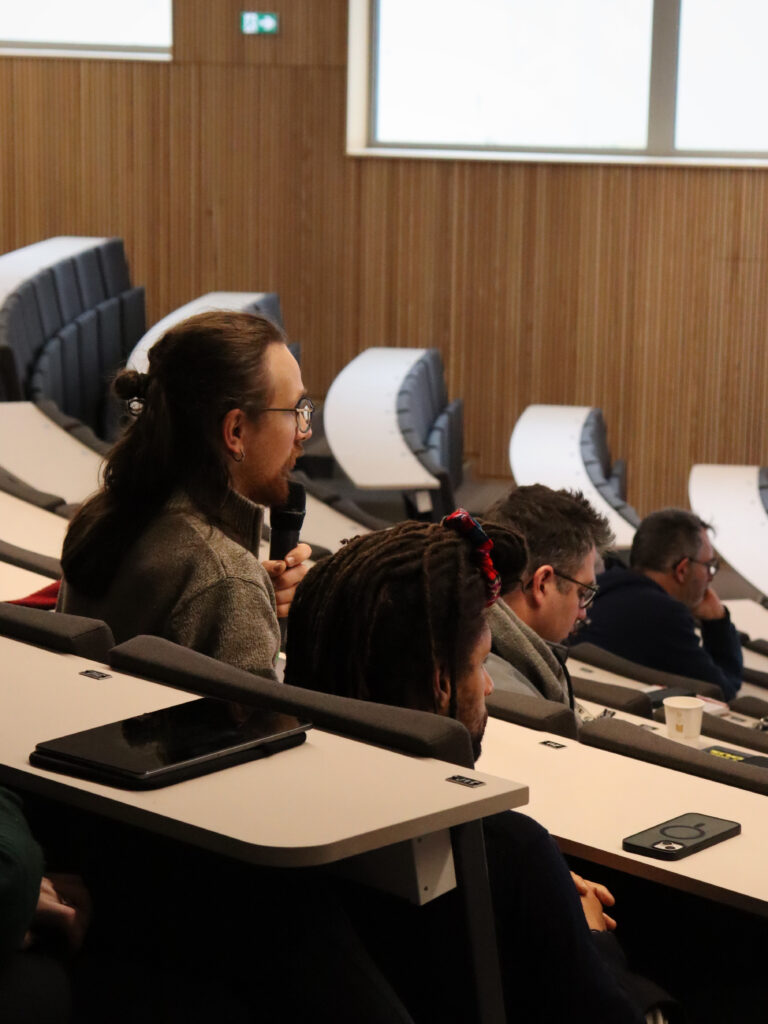
The discussions with the audience allowed for a broader perspective, moving beyond mere observations by exploring potential levers for action, collective responsibilities, and areas for improvement, both at the individual and institutional levels.
🎬 The meeting will soon be available on the ICB YouTube channel.