
Structural Cross-cutting Themes
At the heart of innovation and societal challenges
The ICB, an interdisciplinary laboratory, continues to mobilize its own resources and local resources to promote collective research activities of excellence and the emergence of innovative projects.
Created in 2022, the ICB’s six cross-disciplinary areas of focus are based on its scientific strengths and also draw on local and national opportunities (technology parks supported by the Metropolis, regional projects, PEPR, etc.) and are based on societal issues.
Innovative materials and photonics for health
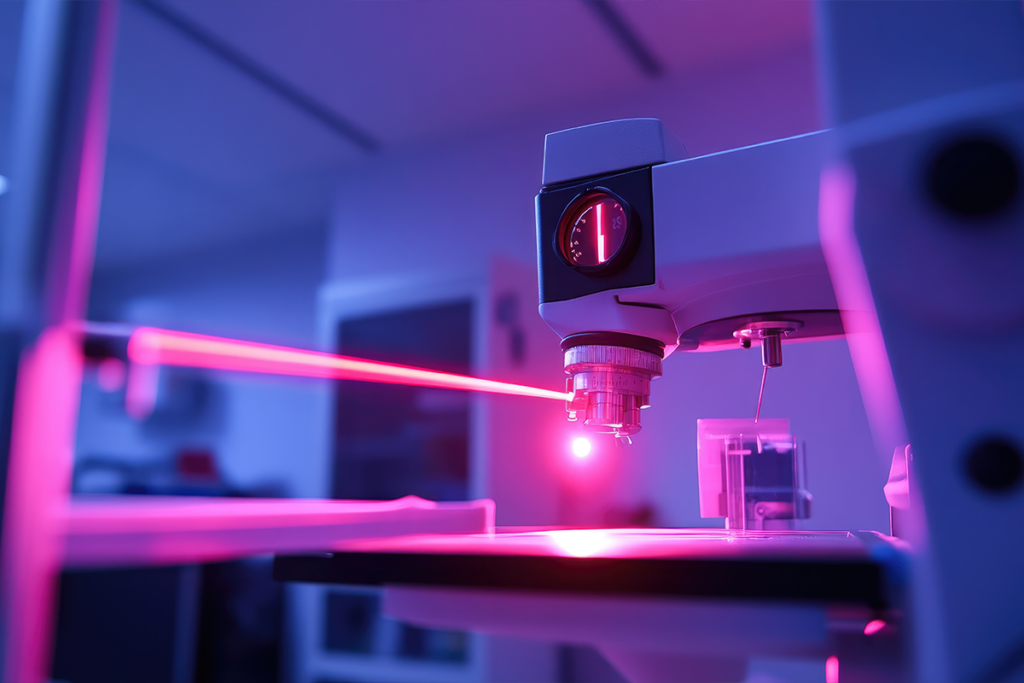
The cross-cutting theme “Innovative Materials and Photonics for Health” brings together the six departments of the ICB, addressing topics at various scales, from the molecular to the macroscopic. It notably covers the development of multimodal probes, multifrequency imaging, optimal control applications for MRI, spectroscopic analysis in biology/medicine, optical fiber fabrication, protein and nanosensor modeling, deep learning for fluorescence image analysis, and the fabrication of microsystems combining photonics, microfluidics, and mechanics.
This theme also encompasses fields such as biomechanics, laser surgery, phototherapy, and sensors. The diverse topics include multiscale and multiphysics issues with Technology Readiness Levels (TRLs) ranging from fundamental research to pre-industrial prototypes, supported by collaborations with companies, hospitals, and institutions such as INSERM and the French Ministry of the Interior. Projects in development include a mobile device for analyzing exhaled air, an AFM platform combining ultrasound and chemical analysis, and an artificial intelligence algorithm for analyzing fluorescence images. Preclinical studies are also underway, such as one on a drug based on titanate nanotubes and a ballistic test mannequin for bulletproof vests.
SUPERVISORS:
Patrick Senet (Nanosciences), Kamal Hammani (Photonics)
icb-sante@ube.fr
Industry 4.0
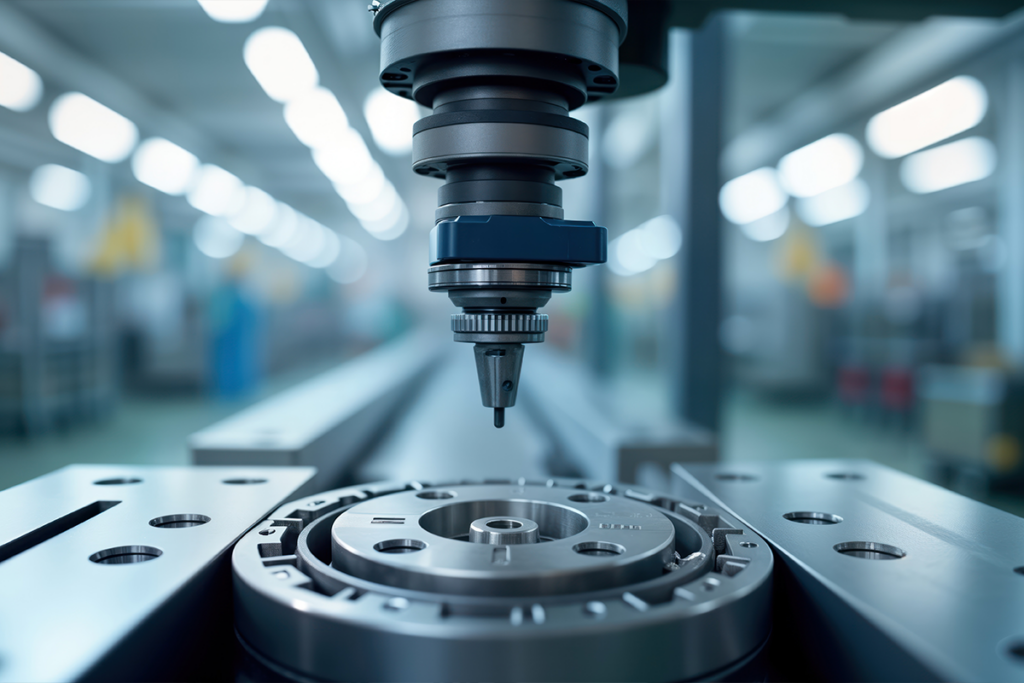
The “Industry 4.0” cross-cutting theme brings together four departments of the ICB (CO2M, Interfaces, Nanosciences, PMDM) and combines robotics, instrumentation, surface characterization, sensors, augmented reality, and AI. It explores robotics/cobotics and sensor technologies for surface characterization.
– Surface Characterization:
Biology (health focus): monitoring of constants, lab-on-a-chip, augmented vision for medical procedures. /Metallurgy: multi-scale approach, AI for robots and cobots (link with the simulation focus). /Materials and Sensors: corrosion detection, defect analysis, quality monitoring.
– Industry 4.0 Projection: automated systems with industrial robots, digital twins, augmented reality to optimize processes.
– Sensors Environment: pollution detection/ Security: explosives detection/ Food: pesticide detection.
SUPERVISORS:
Fabrice Mairesse (Interfaces), Sihao Deng (PMDM Sevenans)
icb-indus4.0@ube.fr
4D printing
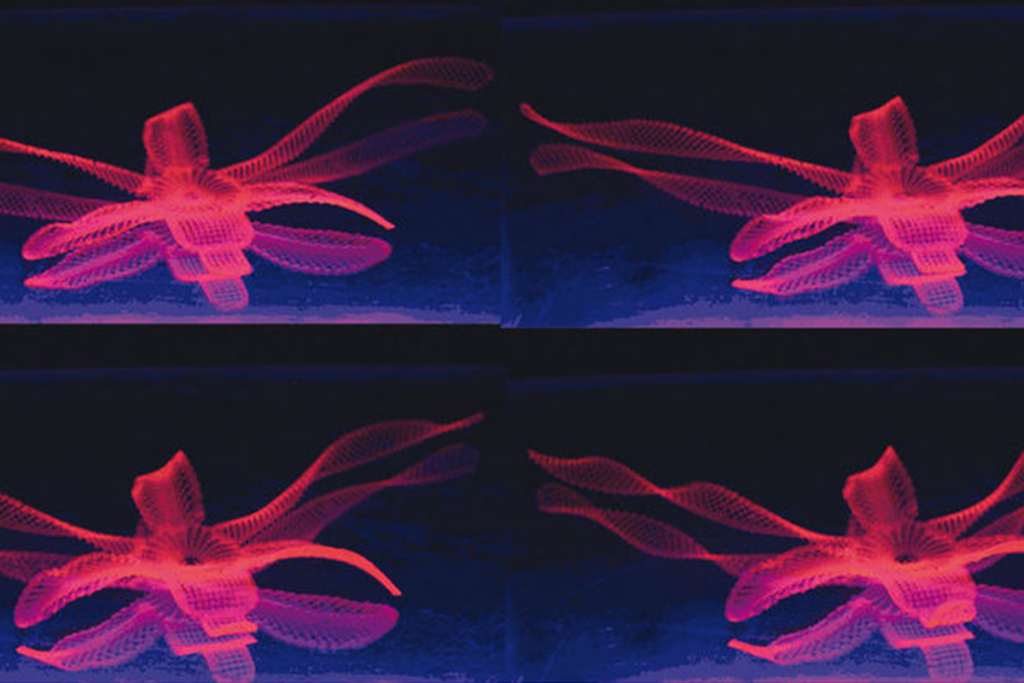
“4D printing”, introduced in 2013 at MIT and the University of Colorado Boulder, combines additive manufacturing with active materials that react to various stimuli (pH, light, temperature, etc.), allowing objects to change shape or properties. This technology promises innovative applications in fields such as biomedicine, automotive, and soft robotics.
In France, the ICB, a pioneer since 2016, stands out thanks to funded projects (PIA, BFC region, CNRS) and a new France 2030 PEPR DIADEM project in collaboration with the CEA. Given its strong interdisciplinary potential, the ICB is well-positioned to strengthen its national and international role.
SUPERVISORS:
Frédéric Demoly (CO2M), Frédéric Désévédavy (Photonics)
icb-4D@ube.fr
Energy and the environment
The cross-cutting theme “Energy/Environment” brings together five of the six departments of the ICB (CO2M, Interfaces, Photonics, PMDM, Nanosciences). Its aim is to share knowledge and foster innovative approaches to the production and management of energy carriers (hydrogen, nuclear, solar, renewables) and the reduction of environmental impact (green cements, pollution control).
This theme, focused on materials research, explores three main aspects:
– Energy: hydrogen carriers (production, storage, conversion), solar energy (ecological photovoltaic conversion), optimization of electric motors, support for the nuclear sector (waste, metal parts).
– Environment: low-carbon cements, air pollution control (VOCs), recycling, optical devices for biology.
– Renewable energies: optimization of heat transfer in solar, wind, and other systems using new materials and fluids.
As a place for exchange, the axis encourages internal collaborations through seminars to identify skills and synergies, paving the way for joint projects.
SUPERVISORS:
Lionel Combemale (PMDM Dijon), Saïd Abboudi (CO2M)
icb-energie@ube.fr
Digital experiments, modeling and artificial intelligence
The cross-cutting theme “Digital Experiments, Modeling, and Artificial Intelligence” brings together the six departments of the ICB and aims to strengthen existing skills and promote new digital approaches coupled with AI (data analysis, machine learning, deep learning, etc.). It covers topics ranging from fundamental physics to materials science and mechanics, favoring multi-scale and multi-physics approaches. Scientific projects are presented by each department, and the theme encourages the sharing of tools and expertise. In the short term, a code-sharing platform (GitLab), invitations to guest speakers, and internal seminars will be implemented to foster collaboration and exchange around AI tools.
SUPERVISORS:
Céline Dupont (Interfaces, Dijon), Adrien Nicolaï (Nanosciences), Maxence Lepers (ICQ), Dominique Chamoret (CO2M)
icb-num@ube.fr
Arts-Design-Sciences
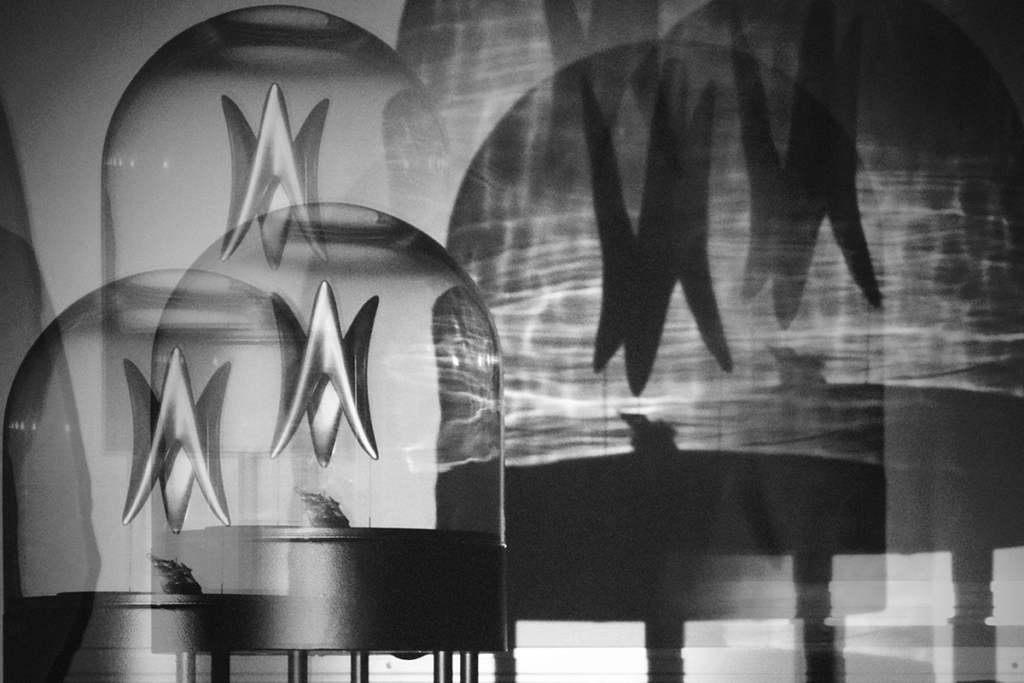
The cross-disciplinary “Arts-Design-Science” axis provides a bridge between the world of scientific research and that of artistic creation and design. This intersection of disciplines fosters reflection on the links between science and innovation, while highlighting scientific results and challenges.
This axis brings together researchers, artists, designers, and cultural stakeholders around collaborative projects where scientific approaches fuel artistic imagination, and where creative sensibility enriches scientific thought. It is part of a process of sharing and openness, notably through:
– Artist residencies, which allow creators to immerse themselves in laboratories to draw inspiration from researchers’ work;
– Conferences and workshops, exploring the intersections between art, design, and science.
SUPERVISORS:
Vincent Boudon (ICQ), Cloë Vautrin
icb-ads@ube.fr